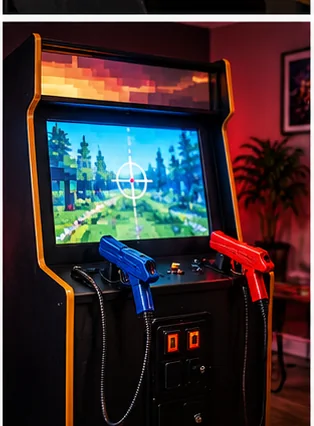
Products and configurations to compare
LCD-compatible USB light gun pair
A pair lets you design the control deck and holsters around real two-player use instead of adding the second gun later.
Best when: you want a DIY PC-based shooter cabinet
Watch for: compatibility/calibration differs by game and tracking system
32-inch low-latency display
A 32-inch 16:9 screen gives good modern shooter visibility while staying manageable in a home cabinet.
Best when: you want enough target size without a commercial-cabinet footprint
Watch for: sensor geometry and viewing distance must match the gun system
Powered USB hub + internal cable panel
A labeled internal hub keeps gun/sensor wiring serviceable and avoids repeatedly reaching the PC.
Best when: you have two guns, sensors, controls and service devices sharing USB
Watch for: cheap hubs can create disconnects or insufficient power
Old CRT light guns and modern LCD guns work differently
Classic guns often relied on CRT scan timing. Modern LCD-compatible systems use optical tracking, sensor bars, cameras or other position references. Do not assume an original gun will simply work on a flat panel.
Screen size changes calibration geometry
Sensors need to see screen corners or reference points accurately. Large screens can exceed the comfortable tracking envelope of some systems unless distance increases.
Two-player width is real
Two adults swinging light guns need elbow space. A narrow cabinet that works for joystick games can feel cramped and unsafe for shooters.
Recoil is a power and noise decision
Solenoid recoil adds immersion but increases current draw, wiring complexity and noise. In an apartment or late-night room, non-recoil guns may be the more usable purchase.
Build calibration access into the cabinet
Sensors move, cameras get bumped and software profiles change. Mount reference hardware where it can be adjusted without dismantling the marquee.
A DIY cabinet should be designed around service access
It is easy to draw a cabinet that looks like an arcade silhouette. It is harder to build one where the monitor can be removed, the PC can be reached, buttons can be replaced and speakers can be serviced without dismantling the whole machine. Before cutting wood, draw the back door, control-panel hinge or removable panel and cable route.
Airflow belongs in the design from the beginning. Mini PCs, power supplies and amplifiers are efficient but still make heat. Intake low, exhaust high, keep dust screens accessible and avoid sealing electronics into a decorative box with no ventilation.
Software and game licensing are separate from hardware
HomeArcadeGuide should be able to tell you what hardware is useful without encouraging unlicensed game acquisition. Use software and ROMs you are legally entitled to run. That keeps the build focused on controls, display, latency and cabinet quality instead of turning a hardware guide into a piracy tutorial.
Before checkout
- Measure final cabinet footprint and player standing space
- Measure the entire delivery route before ordering
- Confirm game list, control layout and number of players
- Check screen size and viewing angle from normal stance/seating
- Confirm Wi-Fi/Ethernet needs and whether online features are optional
- Price stools, risers, mats and surge protection with the machine
- Check warranty, freight damage and return terms
- Confirm replacement controls or parts are realistically obtainable
- Plan ventilation and service access
- Use only game/software content you have the rights to run
Installed cost: the part listings do not show
Budget freight or local pickup, stools or seating, floor protection, surge protection, network access, extension of an existing wired network where appropriate, and an initial parts reserve. If a machine requires permanent electrical work, treat that as room infrastructure rather than hiding it inside the cabinet price. A collection that arrives under budget but has no comfortable place to stand or sit is not actually under budget.
Measure the route with packaging in mind when a machine ships assembled or partly assembled. Door width is only one constraint; stair turns, ceiling height, railings, elevators and the ability to rotate a long cabinet matter. HomeArcadeGuide's doorway and shipping planners exist to catch those mistakes before freight arrives.
How to evaluate the purchase in the first week
Play the games and controls you bought it for, not only the easiest title on the menu. Test every direction/button, both players, audio at quiet and loud levels, network reconnect after power-off, display uniformity and cabinet wobble. If it is a virtual or software-driven platform, update only after confirming the current machine works and documenting its starting state.
Keep the carton and packing material until the return window and freight-damage inspection are safely behind you. Large arcade products are unusually expensive to return, and original packaging can matter if a display or control panel needs to travel for service.
Frequently asked questions
Do old arcade light guns work on LCD TVs?
Many original CRT-based light guns do not; modern LCD-compatible systems use different tracking methods.
What screen size is best?
Around 27–32 inches is a practical home-cabinet range, but the gun system's tracking limits and player distance should decide.
Should I buy recoil guns?
Only if the extra noise, power and maintenance are worth the immersion.
Can I download arcade shooter ROM packs?
Use game software you legally own or are licensed to run; this guide is about hardware, not unlicensed game acquisition.
Primary/current sources
Affiliate disclosure: HomeArcadeGuide.com may earn from qualifying purchases through Amazon Associates and eBay Partner Network at no extra cost to you. Manufacturer links in the source section are research references, not tracked endorsements.